
Laser Dentistry — Precise, Comfortable Treatment with Advanced Technology in Rockville, Bethesda & DC Metro
Experience the future of dental care with our advanced laser technology. Laser dentistry offers unprecedented precision, reduced discomfort, faster healing, and minimally invasive treatment for a wide range of dental conditions—transforming what many patients expect from dental procedures.
Cutting-Edge Laser Technology for Superior Dental Care
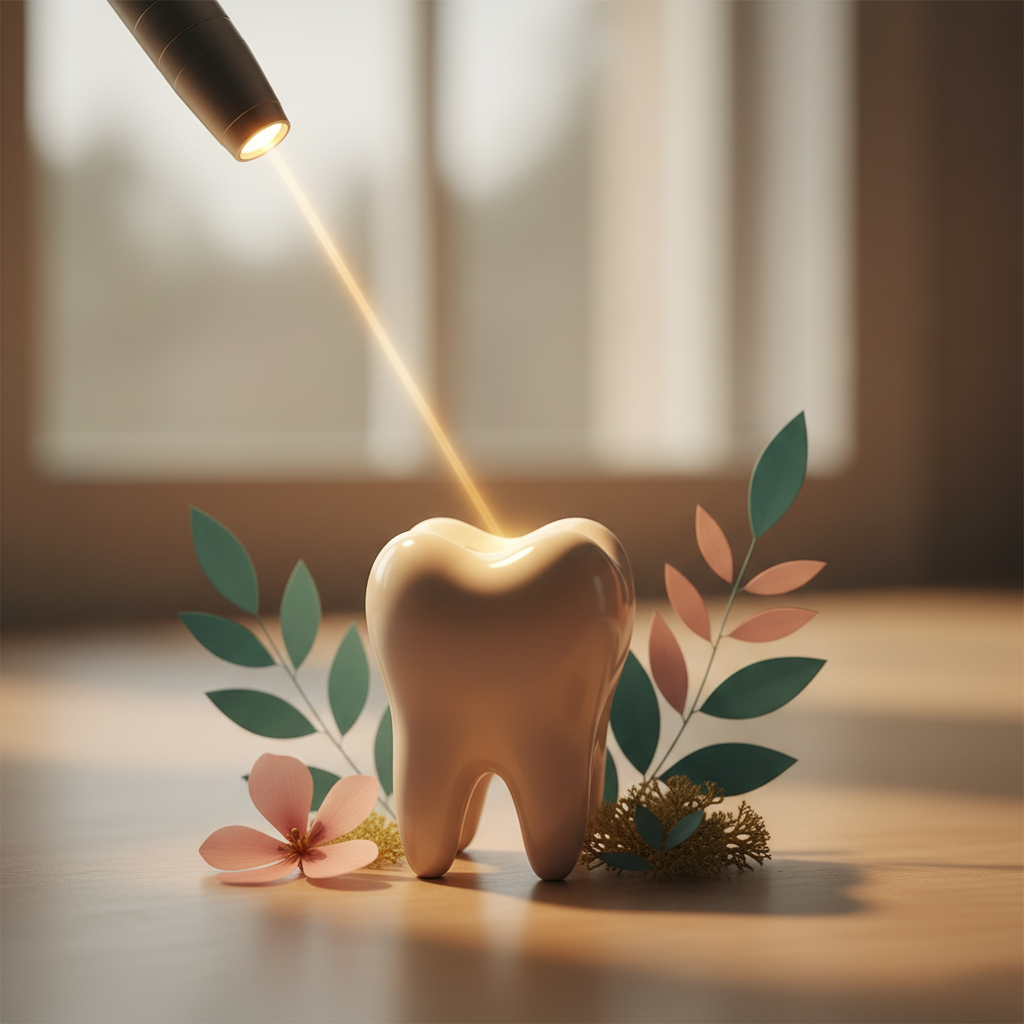
Dental lasers represent one of the most significant technological advances in modern dentistry. These precisely focused beams of light energy allow treatment of both hard tissue (teeth) and soft tissue (gums) with remarkable accuracy, often eliminating the need for scalpels, drills, or sutures while providing superior outcomes and patient comfort.
Unlike traditional methods involving cutting, drilling, or scraping, lasers work through controlled energy delivery that selectively targets specific tissues while leaving surrounding areas undisturbed. For soft tissue procedures, lasers seal blood vessels and nerve endings simultaneously, dramatically reducing bleeding, swelling, and post-operative discomfort. For hard tissue applications, lasers can remove decay with incredible precision while preserving maximum healthy tooth structure—a perfect match for biological dentistry’s minimally invasive philosophy.
At Natural Dentist Associates, we integrate laser technology throughout our practice—from routine periodontal therapy to complex surgical procedures. Our investment in multiple laser systems allows us to select the optimal wavelength and energy level for each specific application, ensuring you receive the most advanced, comfortable, and effective treatment available in modern dentistry.
Why Choose Natural Dentist Associates for Laser Dentistry
Our comprehensive laser capabilities distinguish us from practices offering limited laser applications. We maintain multiple laser systems covering the full spectrum of dental procedures, and our doctors receive extensive training in laser applications and tissue interactions to ensure optimal outcomes.
What truly sets us apart is our biological approach to laser dentistry. We appreciate that laser technology isn’t just about comfort—it’s about supporting your body’s healing capacity through minimally invasive treatment that preserves healthy tissue, reduces inflammatory response, and accelerates recovery. This philosophy aligns perfectly with biological dentistry principles of working with your body rather than against it.
Our patients consistently report being amazed at how comfortable laser procedures feel compared to their expectations from past dental experiences. Many treatments that previously required anesthesia can now be completed with minimal or no numbing, and post-operative recovery typically proves far easier than with conventional approaches.
Expert Laser Dentistry Specialists
Patients appreciate the comfort and precision of laser dental treatment
Comprehensive Laser Dentistry Information
Laser dentistry uses focused beams of light energy to perform precise dental procedures on both soft tissue (gums) and hard tissue (teeth). Different laser wavelengths target specific tissues—some wavelengths are absorbed primarily by water and hemoglobin in soft tissue, while others interact with the mineral content of tooth enamel and dentin. When laser energy contacts tissue, it can cut, vaporize, or modify tissue depending on the power level and application duration.
The technology works through a principle called selective photothermolysis—the laser wavelength is chosen to be preferentially absorbed by target tissue while passing through or being reflected by surrounding tissue. This selectivity allows extraordinary precision. For cavity preparation, lasers can remove decay while preserving healthy tooth structure far better than traditional drills. For gum procedures, lasers can reshape tissue, remove diseased areas, or treat infections while simultaneously sealing blood vessels and sterilizing the treatment site. The result is procedures that are typically more comfortable during treatment, involve less bleeding and swelling, heal faster, and often require less or no anesthesia compared to conventional methods.
Lasers address a remarkably wide range of dental conditions. Soft tissue applications include gum disease treatment removing infected tissue and bacteria, gum recontouring for “gummy smile” correction, frenectomy releasing restrictive tissue connections, treatment of canker sores and cold sores, biopsy of suspicious lesions, and crown lengthening exposing more tooth structure. Hard tissue applications include cavity detection and removal, tooth preparation for fillings, treatment of tooth sensitivity, and teeth whitening acceleration.
Additional laser applications include root canal disinfection eliminating bacteria in complex canal systems, treatment of TMJ and facial pain, surgical procedures including exposure of impacted teeth, and laser bacterial reduction during routine cleanings. For biological dentistry specifically, lasers excel at periodontal pocket disinfection without chemicals, removal of mercury amalgam fillings with reduced vapor exposure, treatment of cavitations in jaw bone, and preparation of sites for biocompatible restorations. The versatility of laser technology means we can often address multiple concerns in a single appointment with minimal discomfort and excellent healing outcomes.
Most patients find laser dental procedures notably more comfortable than traditional methods. For many applications, lasers cause minimal to no discomfort, often allowing treatment without anesthesia. The laser beam itself typically creates only mild sensations—some patients describe slight warmth or tingling, while others report feeling virtually nothing. Because lasers seal nerve endings as they work, post-operative pain is typically minimal compared to procedures using scalpels or drills.
Several factors contribute to this comfort advantage. Lasers create minimal vibration unlike dental drills, which many patients find anxiety-producing. The precision of laser energy means less trauma to surrounding healthy tissue that would otherwise become inflamed and painful. Lasers also seal blood vessels immediately, reducing swelling that often causes post-operative discomfort. For soft tissue procedures, the cauterizing effect means less bleeding and faster initial healing. Many patients who previously experienced significant dental anxiety find laser procedures remarkably tolerable—some even fall asleep during treatment. When anesthesia is recommended for extensive procedures or highly sensitive areas, the amount needed is often less than with conventional approaches.
Laser dentistry offers multiple advantages over traditional approaches. Precision proves superior—lasers can target decay or diseased tissue while preserving more healthy structure than conventional cutting or drilling. Comfort during treatment typically improves as lasers cause less vibration, pressure, and heat than drills. Bleeding reduces dramatically because lasers cauterize as they cut. Swelling and discomfort after procedures decrease due to less tissue trauma. Healing accelerates as laser energy actually stimulates tissue regeneration while creating cleaner wound edges. Infection risk drops because laser energy sterilizes the treatment site. Anesthesia requirements often reduce or eliminate entirely for many procedures.
Traditional tools certainly retain value for some applications—lasers cannot yet replace all dental instruments for all situations. However, for appropriate applications, lasers provide measurably better outcomes. Studies consistently show less post-operative pain, faster healing, and higher patient satisfaction with laser procedures compared to conventional methods. The biological dentistry perspective particularly values lasers’ ability to achieve treatment goals while creating minimal disruption to your body’s healing processes and avoiding the mechanical trauma that conventional instruments can cause.
Dental lasers have outstanding safety records when used by properly trained practitioners. The technology has been FDA-cleared for dental applications for over 30 years, with extensive research confirming safety and effectiveness. The focused nature of laser energy means treatment affects only the precise target area—surrounding tissue remains undisturbed. Unlike X-rays, dental treatment lasers use light energy that does not penetrate deeply or accumulate in the body, posing no radiation concerns.
Safety protocols include protective eyewear for patients and staff blocking the specific laser wavelength, proper training and certification for operators, careful tissue interaction monitoring, and appropriate power settings for each application. Contraindications are minimal—lasers can safely treat pregnant patients, patients with pacemakers (most types), and individuals with most medical conditions. The main precaution involves avoiding laser use directly on certain metal dental restorations depending on the wavelength. Our doctors maintain extensive laser training and follow all recommended safety protocols. The precision and control laser technology provides actually makes many procedures safer than conventional approaches that involve more extensive cutting or removal of healthy tissue alongside diseased areas.
Recovery from laser procedures typically proves notably faster than conventional methods for similar treatments. Soft tissue laser procedures often heal within 3-7 days with minimal discomfort, compared to 7-14 days for scalpel-based surgery. Many patients return to normal activities immediately after treatment. Swelling remains minimal or absent in most cases. Bleeding essentially stops during the procedure due to the cauterizing effect—you won’t leave with gauze in your mouth after gum procedures.
Hard tissue laser procedures (cavity treatment, etc.) usually involve no recovery period—you can eat and drink normally once any anesthesia wears off, often within an hour or less. Because lasers preserve more healthy tooth structure and create less thermal damage than drills, post-operative sensitivity typically remains minimal. For combined procedures addressing multiple areas, the laser approach often allows completion in fewer appointments with shorter overall healing time. Factors affecting your specific recovery include procedure extent, individual healing capacity, and post-operative care compliance. Our biological protocols incorporating nutritional support, appropriate supplements, and oral probiotics further optimize healing. Most patients report being pleasantly surprised at how quickly they feel normal again after laser procedures compared to previous dental experiences.
Lasers excel at treating gum disease and represent a significant advancement over conventional scaling and root planing alone. Laser-assisted periodontal therapy (LAPT) involves using laser energy to selectively remove diseased gum tissue and eliminate bacteria deep within periodontal pockets—areas traditional instruments struggle to access thoroughly. The laser wavelength targets bacteria and infected tissue while leaving healthy tissue intact, providing precision impossible with manual instruments.
The procedure typically involves first removing calculus with ultrasonic instruments, then using the laser to eliminate bacteria and diseased tissue lining the pocket, stimulate bleeding that brings healing factors to the area, and create conditions favoring tissue reattachment to tooth roots. Benefits include deeper disinfection killing bacteria even in complex root anatomy, removal of diseased tissue promoting new healthy attachment, reduced bleeding and discomfort during and after treatment, faster healing with less recession, and stimulation of bone and tissue regeneration. Studies show laser therapy can improve pocket depth reduction and clinical attachment gain compared to conventional treatment alone. For biological dentistry, lasers provide infection control without systemic antibiotics, support natural healing mechanisms, and address the inflammatory burden of periodontal disease that affects overall health. Most patients report minimal discomfort and are amazed at how comfortable gum treatment can be with laser technology.
Hard tissue dental lasers effectively treat cavities in many situations, offering advantages over traditional drilling. The laser can precisely remove decayed tooth material while preserving more healthy enamel and dentin—particularly valuable for biological dentistry’s conservative approach. The process often generates less heat, pressure, and vibration than conventional drills, making treatment more comfortable and frequently allowing procedures without anesthesia for small to moderate cavities.
Laser cavity preparation creates microscopically rough surfaces that can enhance bonding of tooth-colored filling materials. The antibacterial effect of laser energy also sterilizes the prepared cavity, potentially reducing future decay risk. However, lasers cannot yet completely replace drills for all situations—very hard enamel, certain cavity locations, and removal of existing restorations may still require conventional instruments. The ideal approach often combines technologies using lasers where they provide advantages and traditional tools where appropriate. Our practice maintains both technologies, allowing us to select the optimal approach for your specific situation. For patients with dental anxiety, especially related to drill sounds and sensations, laser cavity treatment often provides remarkably more comfortable experiences. Many patients are surprised they can undergo cavity treatment without numbness and leave the office able to eat immediately.
Laser bacterial reduction (LBR) is a adjunctive procedure performed during routine dental cleanings to eliminate harmful bacteria from periodontal pockets and around teeth. The process involves briefly applying laser energy around each tooth after traditional cleaning, targeting bacteria that contribute to gum disease, tooth decay, and systemic inflammation. The laser wavelength is specifically absorbed by pigmented bacteria, effectively eliminating pathogenic organisms while leaving beneficial oral flora largely intact.
Benefits include significant reduction in harmful bacteria that traditional cleaning alone may miss, decreased gum inflammation and bleeding, fresher breath by eliminating odor-causing bacteria, reduced risk of bacteria entering bloodstream during cleaning (important for patients with heart conditions, diabetes, or compromised immunity), and disruption of biofilm formation that protects bacteria from normal cleaning. The procedure adds only minutes to regular cleaning appointments and causes no discomfort—most patients don’t feel anything during the process. For biological dentistry, LBR provides infection control without chemical antimicrobials, supports the oral-systemic health connection by reducing inflammatory bacterial burden, and helps maintain oral health between more extensive cleanings. We often recommend LBR for patients with history of gum disease, those with chronic health conditions affected by oral bacteria, individuals with persistent bad breath, and anyone wanting optimal preventive care. The procedure is safe, effective, and represents proactive biological dentistry at its best.
Laser technology aligns perfectly with biological dentistry’s core principles. The minimally invasive nature of lasers preserves maximum healthy tooth and gum tissue, supporting the biological tenet of conserving natural structures whenever possible. Laser precision allows early intervention when problems are small, preventing conditions from progressing to stages requiring more extensive treatment. The reduced trauma and inflammation from laser procedures supports your body’s natural healing capacity rather than overwhelming it with surgical trauma requiring extensive repair.
For biocompatible dentistry specifically, lasers assist with safe mercury amalgam removal through reduced heat generation and ability to section fillings with minimal vapor release. Laser cavity preparation creates ideal surfaces for bonding biocompatible composite materials. The antibacterial effects reduce need for systemic antibiotics that disturb gut microbiome and overall health. Laser treatment of periodontal disease addresses oral inflammation that contributes to systemic conditions including heart disease, diabetes, and autoimmune disorders—a key oral-systemic health connection. The technology also enables treatment of jawbone infections (cavitations) and diseased tissue around failed root canals without extensive surgery. By working with your body’s healing mechanisms, reducing chemical and pharmaceutical interventions, preserving healthy tissue, and addressing problems at early reversible stages, laser dentistry exemplifies the biological approach to oral health care centered on supporting overall wellness through minimally invasive, biocompatible treatment.
Yes, laser dentistry capabilities are available at Natural Dentist Associates locations serving Rockville, Bethesda, Montgomery County, and the broader DC metro area. We consider laser technology essential to providing advanced biological dental care, not an optional specialty service. Our investment in multiple laser systems across our practices ensures patients throughout our service area can access these advanced treatment options regardless of which location they visit.
Our convenient Rockville location provides easy access from I-270 and I-495, serving patients throughout Montgomery County and Northern Virginia. The consistent availability of laser technology across our locations means your treatment plan won’t be limited by facility capabilities—if laser treatment offers advantages for your situation, we can provide it. Our doctors maintain current training in laser applications and regularly share techniques and outcomes, ensuring consistent high-quality care. Whether you need laser gum treatment, cavity preparation, bacterial reduction during cleanings, or specialized procedures like frenectomy or biopsy, our laser capabilities support comprehensive biological dental care convenient to your home or workplace throughout the greater Washington DC area.
Your first laser dental procedure will likely prove more comfortable than you anticipate based on previous dental experiences. Before beginning, we’ll provide protective eyewear blocking the laser wavelength—this is the only special requirement during treatment. Depending on the procedure, we may or may not recommend local anesthesia. Many laser procedures proceed comfortably without numbing, though we always prioritize your comfort and will use anesthesia if you prefer or if the procedure extent warrants it.
During treatment, you may hear clicking sounds as the laser pulses and might smell a faint odor from tissue interaction—both completely normal. Sensations vary by procedure type and location but typically remain minimal. For soft tissue procedures, you might feel slight warmth or tingling. For hard tissue work, you may notice less pressure and vibration than traditional drilling. The procedure itself usually takes similar or less time compared to conventional methods. Afterward, most patients report being surprised at how comfortable the experience was. Post-operative instructions tend to be simpler than after conventional surgery—often just gentle oral hygiene and perhaps warm salt water rinses. Many patients leave able to eat normally and return immediately to regular activities. We encourage asking questions throughout your procedure—understanding what we’re doing often increases comfort. Most patients who experience laser dentistry request it for future procedures, appreciating the significant comfort advantage over traditional approaches.
While remarkably versatile, dental lasers do have some limitations. Hard tissue lasers work best on tooth decay but cannot effectively remove certain materials including existing metal fillings, crowns, or very hard enamel in some situations—conventional instruments remain necessary for these applications. Lasers cannot currently replace drills for crown preparation or certain types of cavity preparations involving extensive tooth structure removal. For soft tissue, lasers excel at most applications but may not be ideal for procedures requiring extensive tissue removal or reconstruction.
Specific limitations include difficulty treating cavities between teeth in certain situations, limited effectiveness on some porcelain or metal restorations, inability to adjust bite relationships (still requires conventional adjustment), and continued need for traditional impressions or digital scanning for many restorative procedures. However, these limitations continue decreasing as laser technology advances—applications possible today far exceed those available even a decade ago. The key is having practitioners who understand both laser capabilities and limitations, using lasers where they provide advantages while appropriately employing traditional methods when better suited. Our practice philosophy embraces this balanced approach, maintaining comprehensive technological capabilities and selecting optimal tools for each specific situation. This ensures you benefit from laser technology’s advantages without being limited when conventional methods serve better for particular applications in your treatment plan.
Ready to Experience Advanced Laser Dentistry?
Contact Natural Dentist Associates today to discover how laser technology can transform your dental care experience. From routine cleanings to complex procedures, our advanced laser systems provide superior comfort, precision, and outcomes throughout Rockville, Bethesda, and the DC Metro area.